Last updated:
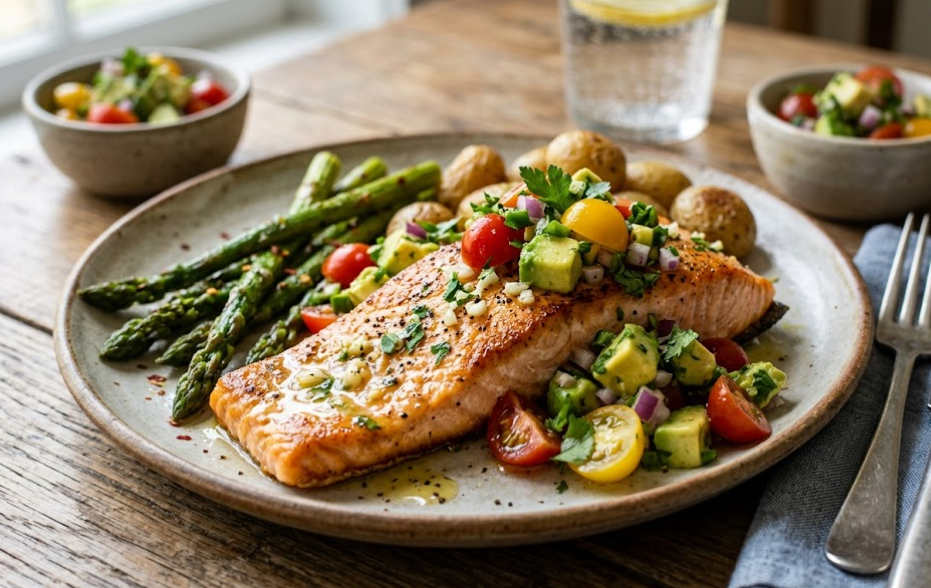
Lemon, garlic, and paprika season salmon fillets while an avocado, parsley, cilantro, and lime salsa supplies a cool contrast. Prepare the salsa before handling raw fish so ready-to-eat ingredients stay separate.
Yield, timing, and equipment
- Yield: 4 servings.
- Serving definition: 1 salmon fillet (about 6 ounces/170 g before cooking) plus about ½ cup salsa.
- Prep time: 20 minutes.
- Cook time: 8 to 12 minutes.
- Total time: about 30 minutes.
- Equipment: two cutting boards, two knives, small mixing bowl, shallow dish, 12-inch skillet with lid, fish spatula, instant-read thermometer, and clean serving platter.
Ingredients
- 4 salmon fillets, about 6 ounces (170 g) each and roughly 1 inch thick, skin on or off
- 1½ tablespoons olive oil, divided
- 3 garlic cloves, finely minced
- 2 tablespoons fresh lemon juice
- 1 teaspoon finely grated lemon zest
- ¾ teaspoon fine salt, divided
- ½ teaspoon black pepper, divided
- ½ teaspoon sweet paprika
- 1 ripe avocado, cut into ½-inch cubes
- 2 tablespoons chopped fresh parsley
- 2 tablespoons chopped fresh cilantro, or more parsley
- ¼ cup finely diced red onion
- 1 tablespoon fresh lime juice
Prepare the salsa and cook the salmon
- Wash hands and sanitize the work area. Wash the avocado before cutting it, plus the herbs, onion, lemon, and lime under running water. On a produce-only board, combine avocado, parsley, cilantro, onion, lime juice, ½ tablespoon olive oil, ¼ teaspoon salt, and ¼ teaspoon pepper. Cover and refrigerate.
- On a separate board and with separate utensils, pat the salmon dry. Do not rinse raw fish. Mix garlic, lemon juice, zest, remaining 1 tablespoon olive oil, paprika, remaining ½ teaspoon salt, and remaining ¼ teaspoon pepper; coat the salmon. Do not reuse marinade that touched raw fish as a finishing sauce.
- Heat the skillet over medium heat. Place salmon skin-side down, if applicable. Cook without moving for 4 to 6 minutes, adjusting the heat to prevent scorching.
- Turn the fillets, cover, and cook for 3 to 5 minutes more. Check the thickest part with a clean food thermometer. Cook to 145°F (63°C); the flesh should be opaque and separate easily with a fork. Time varies with thickness.
- Transfer salmon to a clean platter—never the raw-fish plate. Spoon chilled salsa over each fillet immediately before serving.
Allergen and cross-contact notice
Contains fish (salmon). Packaged seasonings may contain additional allergens; read labels. Keep raw salmon and its juices away from the salsa, clean utensils, and cooked fish. Wash hands with soap and water after handling raw seafood. Substituting another fish changes cooking time and the allergen declaration.
Substitutions
- Use parsley in place of cilantro without changing the quantity.
- Use diced cucumber for up to half of the avocado for a crisper salsa; this changes texture.
- Skinless salmon works, but it may release from the pan differently.
- If starting with frozen salmon, thaw it in the refrigerator overnight. For faster thawing, keep it sealed in a leak-proof bag under cold water and cook immediately.
Refrigeration, freezing, and reheating
Refrigerate cooked salmon and salsa within 2 hours. Store them in separate airtight containers. Use the salsa within 1 day; it is not recommended for freezing. Use cooked salmon within 3 to 4 days. Freeze cooked salmon without salsa for up to 2 months for best quality, then thaw in the refrigerator. Reheat salmon gently, covered, until it reaches 165°F (74°C). Discard perishable food left out more than 2 hours, or more than 1 hour above 90°F (32°C).
Complete the plate
Serve with Turmeric Quinoa and Roasted Vegetables, Zucchini Noodles with Walnut Basil Pesto, or Broccoli and Kale Soup.