Last updated:
Garlic, rosemary, thyme, parsley, and paprika form the crust on this 5-to-6-pound rib roast. Roast dimensions and ovens vary, so the thermometer reading and required rest—not minutes per pound alone—determine doneness.
Yield, timing, and equipment
- Yield: about 8 servings.
- Serving definition: 6 to 8 ounces (170 to 225 g) cooked beef per person after bones and large exterior fat are excluded.
- Prep time: 20 minutes.
- Estimated roast time: about 2 to 2½ hours, but temperature controls doneness.
- Rest time: at least 20 minutes; the official safety minimum is 3 minutes.
- Total time: about 3 hours 10 minutes.
- Equipment: roasting pan with rack, small bowl, chef’s knife, cutting board, paper towels, oven-safe probe or instant-read thermometer, foil, and carving knife.
Ingredients
- 1 bone-in or boneless prime rib roast, 5 to 6 pounds (2.3 to 2.7 kg)
- 3 tablespoons olive oil
- 6 garlic cloves, finely minced
- 2 tablespoons finely chopped fresh rosemary
- 2 tablespoons fresh thyme leaves
- 1 tablespoon chopped fresh parsley
- 2 teaspoons kosher salt
- 1 teaspoon black pepper
- 1 teaspoon onion powder
- 1 teaspoon smoked paprika
Season, roast, rest, and carve
- Heat the oven to 450°F (232°C). Set a rack in the roasting pan. Keep raw beef and its juices away from ready-to-eat foods, clean utensils, and the carving board.
- Pat the roast dry with paper towels; discard them immediately. Mix olive oil, garlic, rosemary, thyme, parsley, salt, pepper, onion powder, and paprika into a paste. Rub it over every exposed surface.
- Set the roast fat-side up on the rack. Insert an oven-safe thermometer into the thickest center without touching bone, fat, or the pan. Wash hands and sanitize tools and surfaces that contacted raw beef.
- Roast at 450°F for 20 minutes. Reduce the oven to 325°F (163°C) without opening it longer than necessary. Continue roasting until the center reaches at least 145°F (63°C). Begin checking well before the estimated finish; a 5-to-6-pound roast commonly needs roughly 1¾ to 2¼ additional hours, but only the thermometer is decisive.
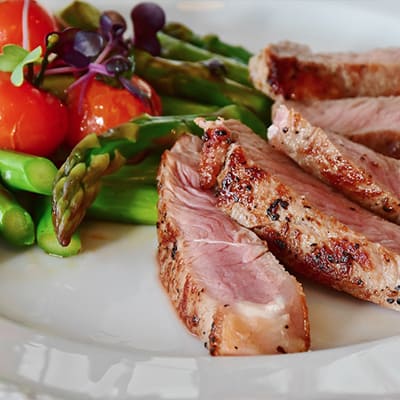
- Transfer the roast to a clean carving board, tent loosely with foil, and rest for at least 20 minutes. This exceeds the required minimum 3-minute rest for beef roasts. Do not carve before the rest is complete.
- If bone-in, remove the rib bones with a clean knife. Slice the roast across the grain and divide by cooked weight or into eight comparable portions.
Allergen and cross-contact notice
The listed roast and single-ingredient herbs do not intentionally add a major food allergen, but spice blends, prepared garlic, and other packaged products may contain allergens or shared-equipment statements. Read labels. Keep raw-beef tools separate and cleaned. No substitution or home-kitchen practice can guarantee absence of cross-contact.
Substitutions and size changes
- Use dried rosemary and thyme at one-third the fresh-herb quantity; the crust texture changes.
- A boneless roast works, but its shape and time differ. Use the same 145°F (63°C) minimum and 3-minute minimum rest.
- Do not substitute ground beef or a mechanically tenderized product into this method; their safety instructions differ.
- If using a roast outside the 5-to-6-pound range, keep the oven temperatures but plan by thermometer rather than scaling time mechanically.
Cooling, refrigeration, freezing, thawing, and reheating
Slice or portion leftovers and refrigerate within 2 hours in shallow containers. Use within 3 to 4 days. Freeze tightly wrapped portions for up to 2 months for best quality and thaw in the refrigerator. Reheat leftovers to 165°F (74°C). Discard beef left out more than 2 hours, or more than 1 hour above 90°F (32°C).
Serving ideas
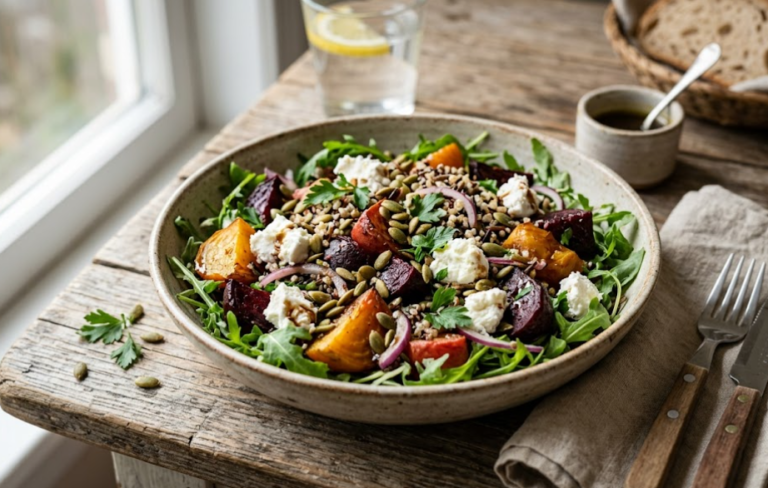
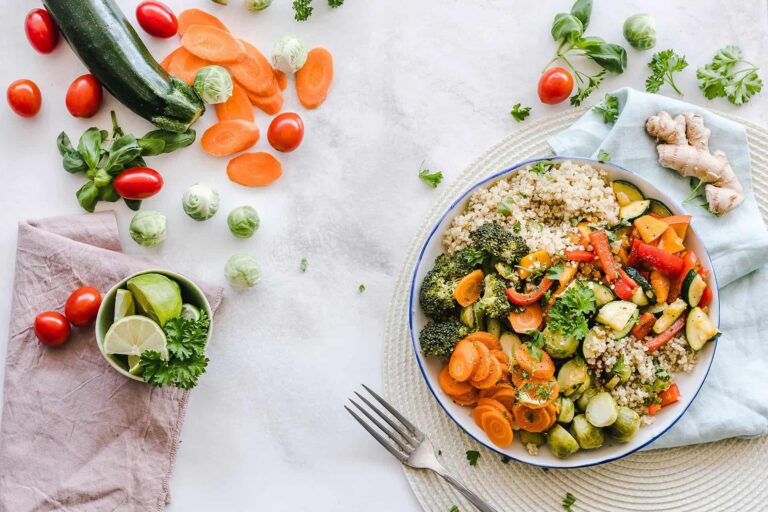
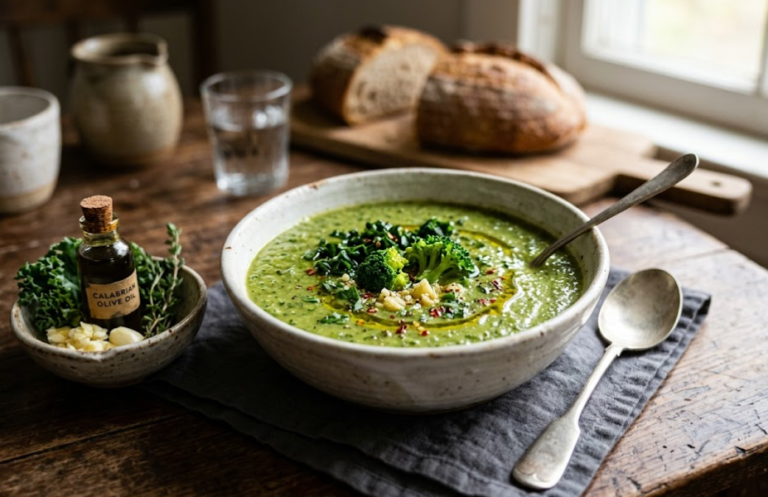
Serve with Turmeric Quinoa and Roasted Vegetables, Beetroot and Goat Cheese Salad, or Broccoli and Kale Soup.